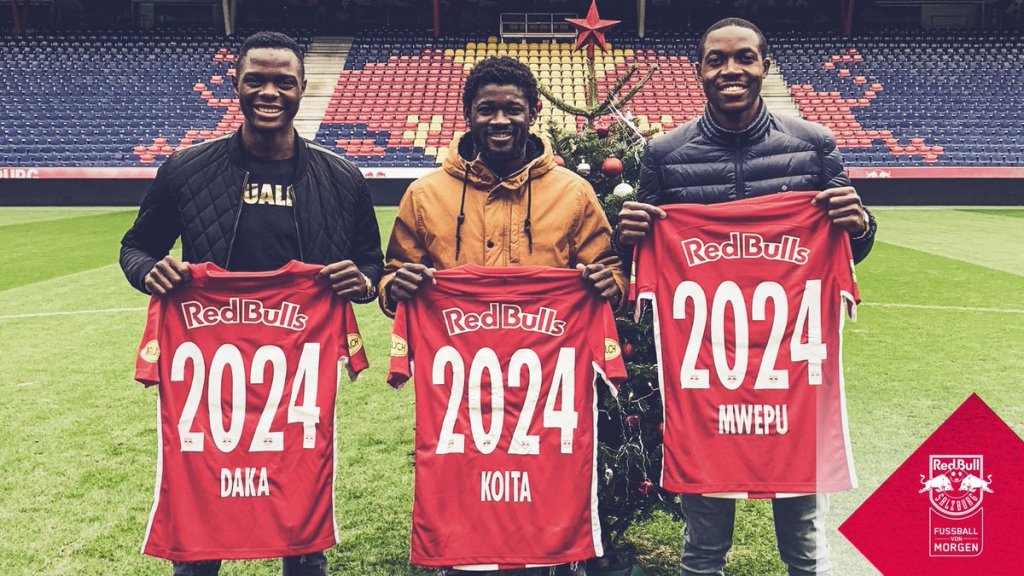
I didn’t really notice FC Red Bull Salzburg (formerly SV Austria Slazburg before the Red Bull takeover) until last year when they were in the same Champions League group as Liverpool and Napoli. I heard about the likes of Minamino, Håland and Hwang Hee-Chan and their elite performance against Liverpool at Anfield. Now that those players have departed the club, I realized the abundance of African players Salzburg has on their roster. Like, it’s a lot…10 to be exact.
That almost makes me suspicious.
The next closest team in the Austrian Bundesliga has five African players. Salzburg would fit in nicely in the African-friendly French league, Ligue 1. Part of me sees it like an obsession, like the coach/ownership wants these quick, strong, African players to fill their team. I don’t know why, but that’s just how it looks to me surface-level. But let’s dive deeper and analyze Salzburg’s transfer activity over the years and see if they really do go after African players or if it’s just a recent occurrence the past season or two. I’ll also look into analyzing why Salzburg may want to have an abundance of African players. I made this table detailing the number of African players Salzburg acquired every season since the Red Bull takeover (April, 2005):
| Season | Number of African Players Acquired |
|---|---|
| 2005/06 | 0 |
| 2006/07 | 0 |
| 2007/08 | 2 |
| 2008/09 | 3 |
| 2009/10 | 1 |
| 2010/11 | 0 |
| 2011/12 | 0 |
| 2012/13 | 4 |
| 2013/14 | 1 |
| 2014/15 | 1 |
| 2015/16 | 3 |
| 2016/17 | 3 |
| 2017/18 | 6 |
| 2018/19 | 4 |
| 2019/20 | 4 |
| 2020/21 | 4 |
As you can see in the table, a lot more African players were acquired during the latter part of this past decade. I can think of two reasons for this increased transfer activity among African players: the Red Bull Academy in Ghana and Sadio Mané.
Ghana Red Bull Academy
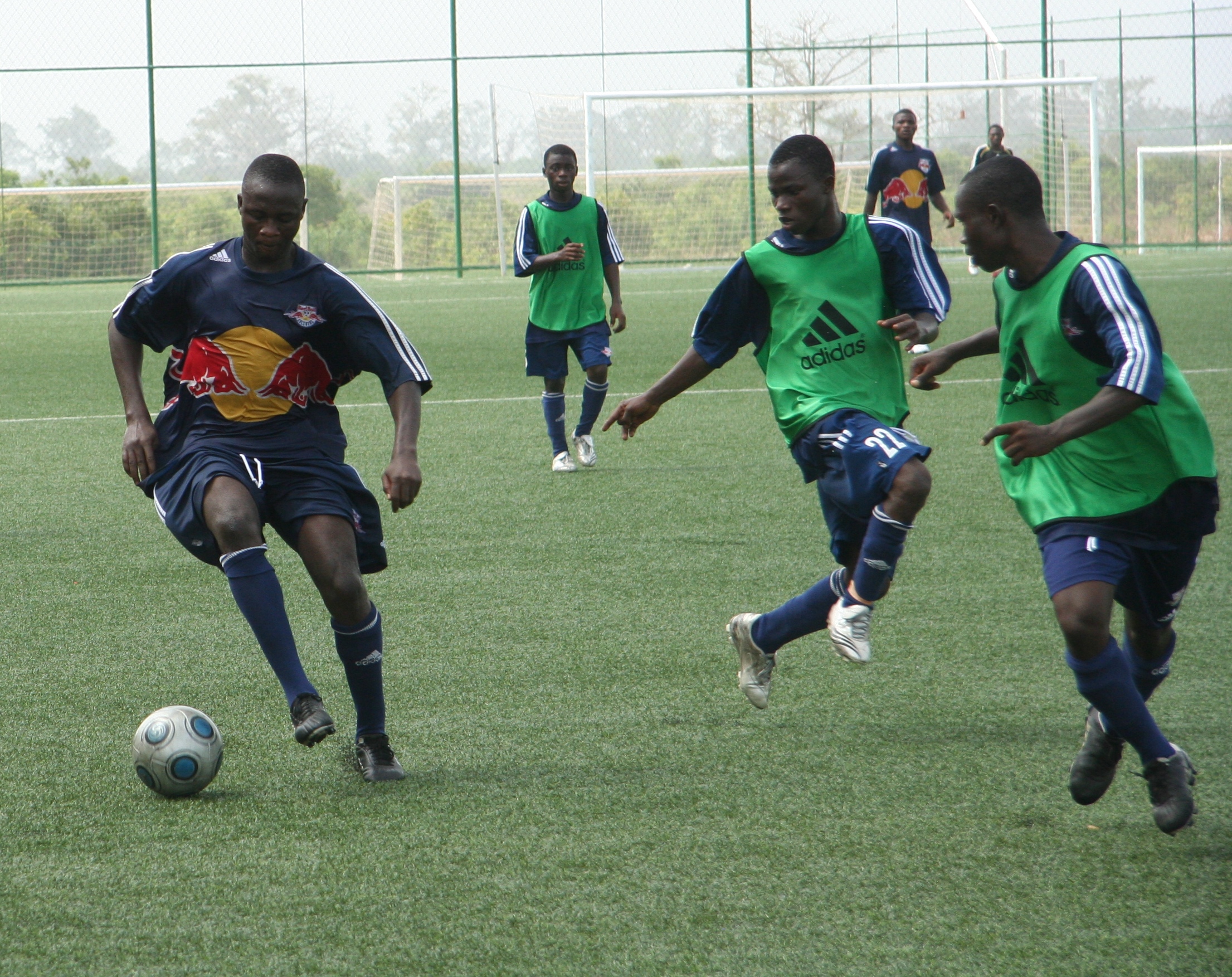
Much like how AFC Ajax had a South African affiliate in Ajax Cape Town, there was a Red Bull affiliate in Ghana called the Red Bull Academy (disbanded in 2014). Only two Ghanaian players eventually featured for Salzburg during the six year span the Red Bull Academy existed. That probably explains why they disbanded. But even without the Red Bull Academy, Salzburg increased their pursuit and acquisition of African players following the 2014/15 Salzburg season. Even though Salzburg hardly utilized players from Red Bull Academy in Ghana, one could argue they were exposed to the African market (African players based in Africa or in Europe).
Sadio Mané
I think what accelerated their transfer activity in the African market following the 2014/15 Salzburg season is largely due to one player: Sadio Mané.

In my opinion, the Senegalese winger is probably their best African player to date, (and possibly in the conversation of being one of the best players in the club’s history) scoring 46 goals and providing 31 assists in 87 appearances. He left the club late in the summer transfer window in 2014 (sold for $25 million after being purchased for $4 million) and went to Southampton. His transfer coincided with the closing of the Red Bull Academy in Ghana. Salzburg probably wanted to get other African players that could provide good performances for the club at a cheap rate and make a financial profit. Salzburg found gems in Naby Keita (bought for $1 million, sold for $32 million) Dayot Upamecano (bought for $2 million, sold for $11 million) Amadou Haidara (sold for $21 million) and they currently have stars in Enock Mwepu and Patson Daka who could be sold for a lot of money.
Now that I think of it, I don’t think it’s weird Salzburg acquires a lot of African players. They like what they’ve seen from these young African players and continue to acquire them. Consequently, they give these unknown African players exposure in Europe by participating in the Champions League and Europa League. And on the business end, they make profits. It’s a win-win.
 Eddie Mungai
Leave a comment