
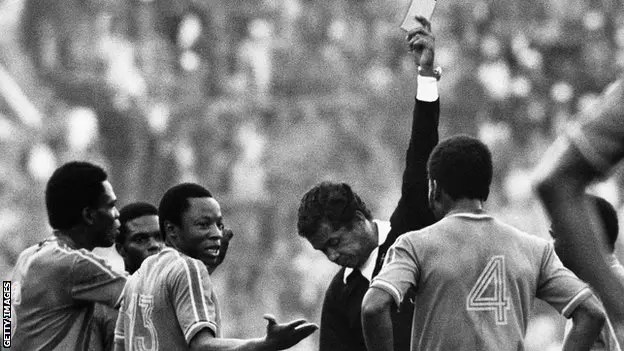
On June 18, 1974 in West Germany, World Cup debutants and sub-Saharan African trailblazers Zaire played their second World Cup game after losing 2-0 to Scotland. In the Parkstadion, they faced the mighty Yugoslavia. Already down 2-0 in the first 20 minutes, one of Zaire’s top players, striker Pierre Ndaye Mulamba, received a red card, and what ensued was an onslaught. Zaire suffered its worst defeat in team history, losing 9-0. Their last group game against Brazil ended in a 3-0 defeat, and their World Cup journey dissipated virtually instantaneously.
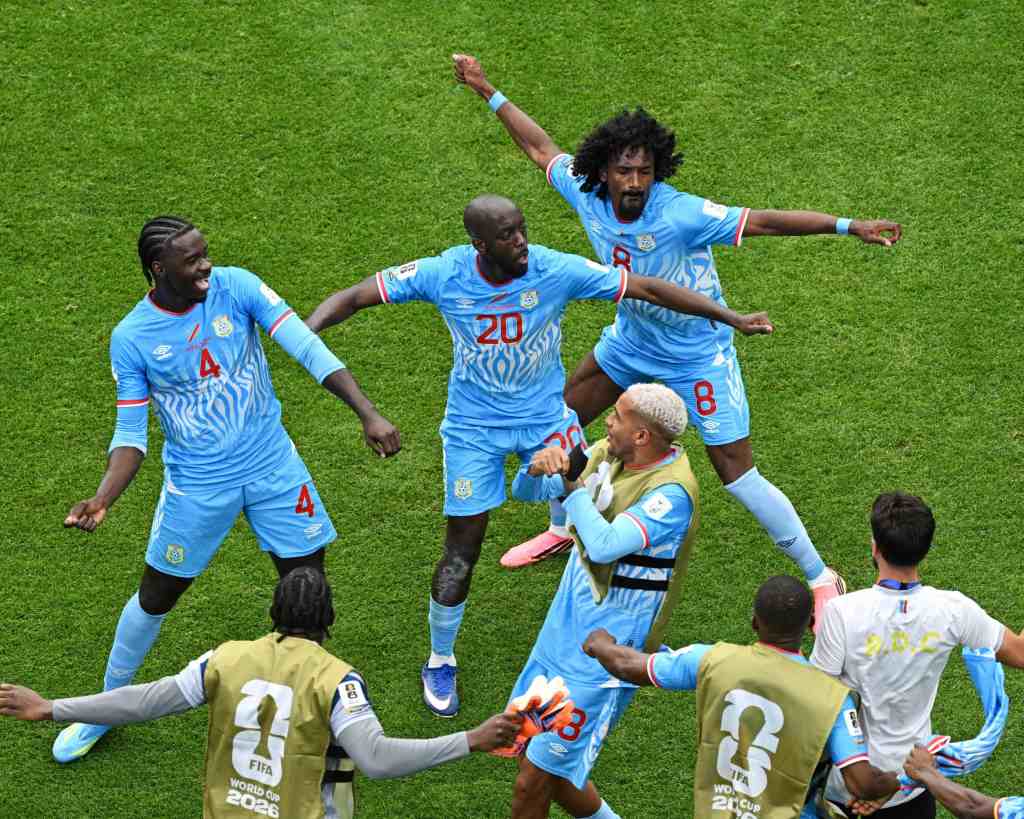
Nearly 52 years to the day from their historic defeat, the Democratic Republic of Congo tied the fifth ranked Portugal 1-1 in their first match of the 2026 World Cup, scoring their first goal and earning their first point in World Cup history.
To realize the significance of the result of Les Léopards, let’s look at how far they’ve come.
The Golden Generation of the 1970’s
Albeit a disastrous World Cup debut, Zaire was the reigning African Cup of Nations champions months before their World Cup debut, claiming their second AFCON title following a 2-0 victory over Zambia. Legendary striker Mulamba scored nine goals during the tournament, which still stands as the most goals scored in a single AFCON tournament. The team was equipped with the first iteration of the “golden generation” along with Mulamba, including Kakoko Etepe, Mayanga Maku, and Kibonge Mafu, with some playing their club football in Europe including VfB Stuttgart. Unfortunately united by poverty later in life following the conclusion of their football careers, their achievements in their prime may have established foundations the Fédération Congolaise de Football-Association (FECOFA) could build on. But before the Cédric Bakambu, Yoan Wissa, Chancel Mbemba, and Aaron Wan-Bissaka generation, there was Etepe, Maku, and Mafu.
Overcoming Challenges in FECOFA
Over the past 52 years, Les Léopards have qualified for the AFCON semifinals three times (1998, 2015, 2023). Although World Cup appearances or AFCON trophies have not occurred since 1974, their recent AFCON performances are an indicator of the team’s rise. But in the midst of the team’s resurgence, happening concurrently with their World Cup pursuit were preparations for the upcoming FECOFA elections. These elections resulted in a new executive committee, including a new president, since FIFA installed a seven-month normalization committee in April 2023 with FIFA and CAF-appointed personnel running the daily affairs of FECOFA due to challenges in leadership integrity and lack of stability in the federation. Three years of reforms and revised statutes later, the normalization committee allowed FECOFA elections to occur after they were originally scheduled for April 9-11 2026, but FIFA suspended the elections to May 2026, citing financial concerns within the Congolese football governing body).
Several candidates vied for the position of president, including a former Portuguese-Congolese footballer, former CAF general secretary, a former FECOFA vice president, and a former FECOFA deputy secretary. In May, the former CAF general secretary Véron Mosengo-Omba was elected FECOFA president, with aims of professionalizing FECOFA by improving its transparency and strengthening local competitions.
The challenging period in FECOFA over the last three years tested the federation, but with the election of Mosengo-Omba, coupled with the men’s national football team’s return to the World Cup, could be a the catalyst for the team returning to the glory once achieved in the 1970’s.
And they are well on their way.
Their journey to making history in 2026
The Democratic Republic of Congo’s World Cup journey started long before 2026, with qualifiers beginning in 2023, yet it’s been impacted by the ongoing war and the outbreak of Ebola. The peak of their World Cup qualifying campaign occurred last November, after being one of the four best 2nd place finishers in their World Cup Qualifying group. They played in the CAF Playoff made up of Cameroon, Nigeria, and Gabon. After defeating Cameroon 1-0 in the semi-finals, Democratic Republic of Congo faced Nigeria in the final leg, defeating them in a penalty shootout. This win qualified them to play in a World Cup Qualification Inter-Confederation match against Jamaica, which they won 1-0, securing their place in the World Cup.
The “Golden Generation” of 2026 contributed significantly to getting the Democratic Republic of Congo to where they are. The top scorer in World Cup qualifying for DR Congo was striker Bakambu. The top assist leader for Democratic Republic of Congo in the World Cup qualifiers was striker Wissa. The goalscorer for the winning goal against Cameroon in the CAF playoff semifinal was star center back Mbemba. The winning penalty scored in the CAF playoff final was also Mbemba. The winning goal scored in the World Cup Qualification Inter-Confederation match was central defender Axel Tuanzebe.
And in the biggest match in the Democratic Republic of Congo national team’s history, their first ever World Cup goal was scored by Wissa.
It’s a great start, and they’ve already made history in this tournament. They’ve put themselves in a good position to advance to the next round. Democratic Republic of Congo’s next match is against Colombia, which is far from easy after they currently lead the group. But this team is capable of achieving even more history and can advance to the knockout stages for the first time.
Follow me on Bluesky!
 SuperBafanaStars
Leave a comment