
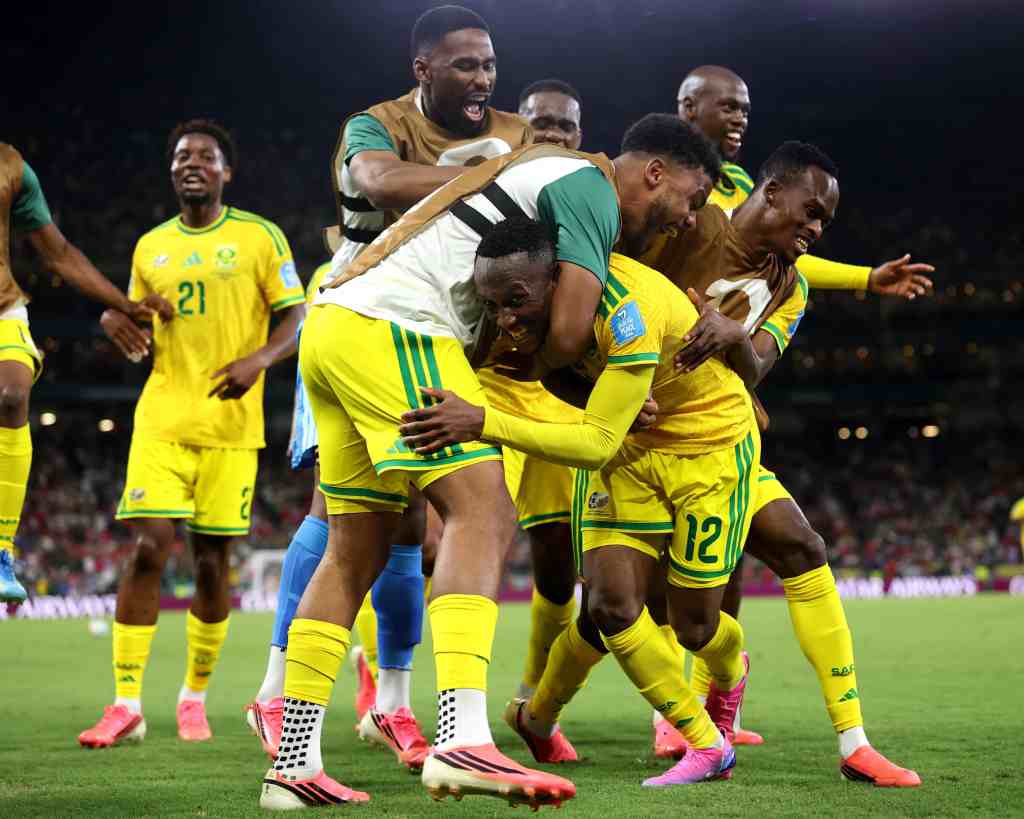
Think about some of the big name South African players that played over the last 15 years. Steven Pienaar. Aaron Mokoena. Kagisho Dikgacoi. Bernard Parker. Itumeleng Khune. Siphiwe Tshabalala.
These players of the past showed out for South Africa in the international tournaments, including the 2010 World Cup and the Confederations Cup the year before. They represented their clubs in South Africa and Europe. These were good times.
Sixteen years later, it’s a new period for Bafana Bafana. Compared to the last World Cup squad that had an equal balance of domestic and European-club players, South Africa has a squad predominantly based in South Africa, with only seven based in Europe and America. The number of players from South African clubs was 16 in 2010, and these were the clubs that were represented:
2010 South Africa World Cup Squad
| Club | Number of Players |
| Orlando Pirates | 3 |
| Mamelodi Sundowns | 4 |
| Ajax Cape Town | 1 |
| Kaizer Chiefs | 3 |
| Moroka Swallows | 1 |
| Supersport United | 1 |
| Golden Arrows | 2 |
| Maritzburg United | 1 |
And here’s the representation breakdown for the 2026 World Cup:
2026 South Africa World Cup Squad
| Club | Number of Players |
| Mamelodi Sundowns | 8 |
| Orlando Pirates | 8 |
| Siwelele | 1 |
| Polokwane City | 1 |
| Kaizer Chiefs | 1 |
The thing that sticks out is the number of Mamelodi Sundowns and Orlando Pirates players selected to this year’s World Cup squad. With qualification to the Round of 32, South Africa has demonstrated a blueprint African teams can follow. Looking beyond this tournament, these are some things to consider in the future as South Africa prepares for a return to the World Cup in 2030.
Select more players from South African clubs
On the 2026 World Cup squad, the South Africa men’s national team had 16 of 19 South Africa-based players come from two clubs. Orlando Pirates, current South Africa Premier Soccer League champions, and Mamelodi Sundowns, current CAF Champions League winners, make up the greatest composition of domestic players (eight from Pirates and eight from Sundowns). No more than four players came from one South African club in Bafana Bafana World Cup history.
Is this the formula to advancing from the group stage for the first time?
It could be, considering this was the first time they’ve had their squad heavily concentrated with South Africa-based players.
In addition to the data provided for the 2010 and 2026 squads, here’s the breakdown of the 1998 and 2002 South Africa World Cup squads:
2002 South Africa World Cup Squad
| Club | Number of Players |
| Kaizer Chiefs | 2 |
| Jomo Cosmos | 2 |
| Orlando Pirates | 1 |
| Santos Cape Town | 1 |
| Ajax Cape Town | 1 |
1998 South Africa World Cup Squad
| Club | Number of Players |
| Mamelodi Sundowns | 1 |
| Orlando Pirates | 2 |
| Cape Town Spurs | 1 |
| Kaizer Chiefs | 2 |
| Manning Rogers | 1 |
| Supersport United | 1 |
| Bloemfontein United | 1 |
In their first World Cup appearance in 1998, the squad had 9 South African-based players in the team, with the majority from Kaizer Chiefs. In the 2002 World Cup, there were seven players from South Africa-based clubs, most of whom came from Kaizer Chiefs and Jomo Cosmos.
“To get something you never had, you have to do something you never did.” Even though 16 players on the roster were selected from two of the best clubs in South Africa, I credit them for trying something new to get a historic result.
It appears this is the formula for advancing to the next stage.
Lean on Mbokazi and Appollis
Along with the team’s strategy in selecting more domestic players to the World Cup squad, the future is bright for South Africa as they have the youth on the team in key outfield positions. In attack, winger Thapelo Maseko is only 22 years old, and he scored the winning goal against South Korea in their last group game to take them to the Round of 32. Attacking midfielder Relebohile Mofokeng is only 21 years old. One of the center backs, Ime Okon, is 22.
But there are a couple of players I want to focus on that I believe will be the focal point for South Africa’s run to making the 2030 World Cup: Mbekezeli Mbokazi and Oswin Appollis.
Mbokazi is a 20-year-old center back who recently transferred from Orlando Pirates to MLS side Chicago Fire earlier this year. The Fire are the third-best team in their conference, and Mbokazi has been selected as an MLS All-Star in his debut season. He will be a mainstay in the backline for Bafana Bafana, and he showed his value in the final group game against South Korea. His club coach Gregg Berhalter echoes the sentiment that Mbokazi has the ability to play in a top club in Europe.
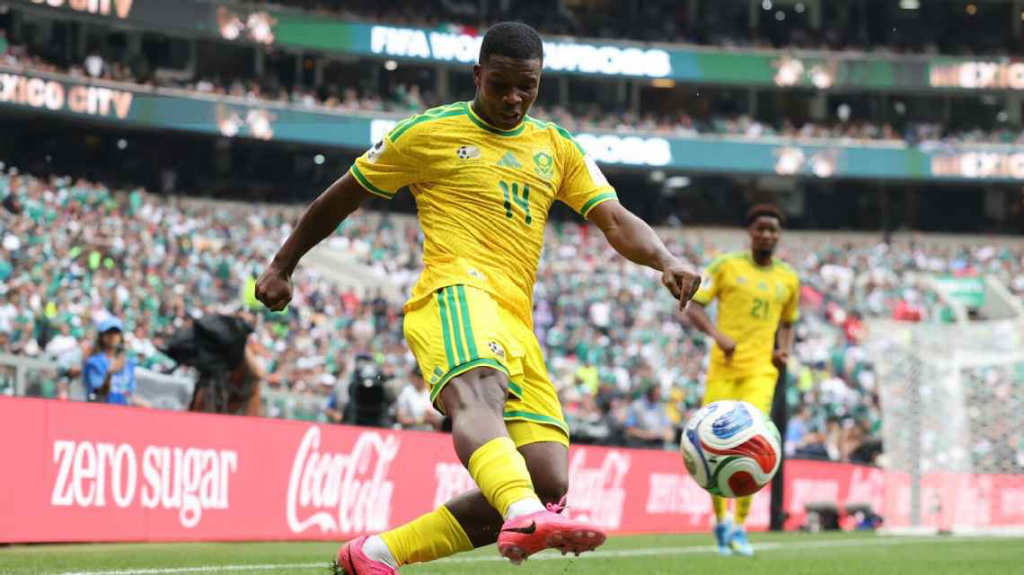
(Hector Vivas – FIFA/FIFA via Getty Images)
The days of Percy Tau representing Bafana Bafana appear to be no more. But Oswin Appollis of Orlando Pirates, a player playing a similar position and of a similar stature as Tau, is providing an attacking threat for the national team. Appollis’ output could very well surpass Tau’s national team goal tally of 15. He’s more than halfway there. Oswin Appollis’s eight goals for the national team are the fourth-highest tally among active players who are currently on South Africa’s World Cup squad. South Africa will need all the goals and experience from the 24-year-old forward moving forward.
South Africa, it looks like you’ve developed a formula for advancing to the knockout stage!
Follow me on Bluesky and X!


Leave a Reply