
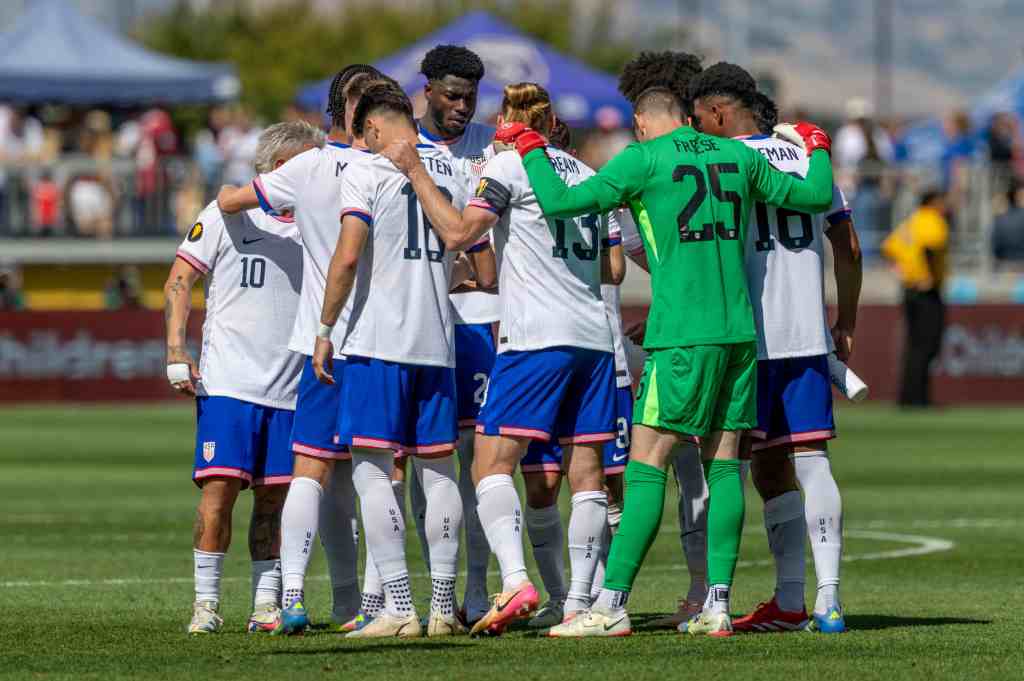
Folks are buying into the World Cup hype with the good performances of the US Men’s National Team (USMNT) thus far. And it’s deserved. The US serving as a joint host has implications for the development of soccer after the World Cup. Good things have happened since the US last hosted the men’s World Cup in 1994, including the formation of Major League Soccer. For this year’s World Cup, there’s a list of things I would like to see that leaves a legacy in the US following the tournament’s end. A number of the suggestions are inspired by Qatar’s legacy group, the Supreme Committee for Delivery & Legacy.
Implement promotion and relegation in Major League Soccer
I’m a fan of the United Soccer League (USL) for several reasons, and I thank Côte d’Ivoire Didier Drogba for making me pay attention to Phoenix Rising FC. I am a casual fan of Oakland Roots SC because they are a purpose-driven professional soccer club that uses soccer for social good, specifically focus on increasing the health, equity, and happiness of the City of Oakland (it’s the first American professional soccer club of its kind with this kind of mission). But what I really like about the USL is how they are with the times. They are implementing a promotion-relegation system for the three tiers in the USL in 2028. On their website, they take pride in being a leader in shaping the future of soccer in the United States. Major League Soccer has to get onboard with this development. MLS already decided to change the league schedule to match that of FIFA and the major European leagues by the 2027/28 season. And now it’s time for the promotion relegation. How cool would it be to see the Chattanooga Red Wolves in MLS (shoutout to the Chattanooga Red Wolves btw).
Or even better, how special would it be to have the New York Cosmos make a return to the top division of US Soccer. That’s the excitement that awaits MLS if promotion-relegation is introduced.

All soccer specific stadia should achieve LEED Platinum Status
One of the big achievements following the 2022 World Cup in Qatar was the environmental sustainability of their smart stadia. All eight of the stadia in Qatar had achieved a new level of green certification under the Global Sustainability Assessment System (GSAS). GSAS is developed in Qatar so it’s not necessarily applicable to stadia in the US. But Leadership in Energy and Environmental Design (LEED) is the most widely used green building rating system and 13 of the 16 stadia in the World Cup are LEED certified (including nine venues in the US, with Seattle’s Lumen field achieving TRUE certification instead of LEED certification). However, only Lincoln Financial Field in Philadelphia has LEED Platinum status, with most stadia having LEED Gold status. Making stadia “smart” is something that other stadia are doing all over the world.
Broaden qualification criteria when identifying talent in soccer
In the 2022 World Cup, the Supreme Committee for Delivery & Legacy said there were “249,000 job years” added as a result of the tournament, specifically in the industries of construction, events, and tourism. If confused with the term “job years”, it basically means they hired 249,000 full-time employees who worked for at least a year. For the World Cup, 185,000 US jobs were added (it’s not clear if they were full-time). With the continued success of the USMNT in this year’s World Cup, there will likely be a boom in soccer popularity, which in turn would result in an increased demand in soccer, thus requiring more personnel to meet the spike in interest.
I encourage professional soccer employers, whether it’s teams, leagues, federations, or confederations, to be flexible in assessing the qualifications of potential new hires. The typical profile of an entry level candidates consists of someone who studied sports management or business and had an internship with a sports organization in college. A mentor of mine, Barbara Gonzalez (CEO of Tanzanian club Simba SC), once said this:
“We need people who think outside the box, we need people from the private sector, we need people from the public sector we need people who are thought leaders in this space.”
Essentially, the more people from different backgrounds and experiences are hired, the better.
That’s what’s needed.
I’m not worried about the youth soccer legacy this tournament will leave. It’s inevitable—there will be a growth in youth soccer. Mini pitches have been built, especially in areas with little soccer access. And the US Soccer Federation’s Supreme Committee for Delivery & Legacy-equivalent, Soccer Forward, is focusing on ensuring grassroots soccer programming is available in every school in the United States.
The legacy for this World Cup has huge implications on the soccer ecosystem in the United States. And I would love it if all of these suggestions are realized!


Leave a Reply